
All Courses
Mentor-led practical program
Professional UI/UX Design & AI-Powered Workflow Program
Learn UX thinking, interface design, and AI-powered workflows through real-world projects and mentorship.
Best for: Students, Career Switchers and Freelancers.
- 12 core modules
- 4 months
- Offline
- Beginner to intermediate


Google Certified Mentor

Design Thinking Approach
The modern design path
A Complete Learning Path for Future UI/UX Designers
Whether you're starting from scratch or transitioning into design, this program helps you build a strong foundation in user experience, interface design, design systems, prototyping, and modern AI-assisted workflows. Rather than focusing only on software, you'll learn how designers think, communicate ideas, and create solutions that improve user experiences.

UX Foundations
Turn problems into clearer product thinking. Learn fundamentals, research habits, information architecture, and writing decisions that shape stronger user experiences.
Figma + Interface Design
Move from wireframes to polished screens with better hierarchy, layout systems, components, and interactive prototypes that feel closer to real product work.
Career-Ready Output
Build portfolio-facing work, sharpen testing and iteration habits, and strengthen your frontend awareness so your designs are easier to hand off and present.
What you'll learn
12 modules. Built for real design work.
Every module is designed for applied learning, not passive watching. You build stronger thinking, clearer interfaces, and practical output through a workflow that connects UX, UI, prototyping, and implementation awareness.
Ready to start learning?
Join a focused cohort designed to move beginners toward confident, portfolio-ready design work.
Apply for the Next Batch- 1.Design FundamentalsFoundation
- 2.UX Research & AI-Assisted DiscoveryAI Native
- 3.Information Architecture & User FlowsAI Assisted
- 4.UX Writing & MicrocopyAI Native
- 5.Figma EssentialsFoundation
- 6.Visual Assets & IconsFoundation
- 7.Wireframing & Interface DesignAI Assisted
- 8.Interactive PrototypingAI Assisted
- 9.Usability Testing & IterationHybrid
- 10.HTML5/CSS3 IntroductionFoundation
- 11.Freelancing & Personal BrandingFoundation
- 12.Industry Capstone ProjectReal-World Application
Who is it for
Built for people who want to make, test, and ship thoughtful design work.
This program is designed for learners who want practical growth, stronger portfolios, and clearer design thinking instead of passive tool tutorials.

Students & Fresh Graduates
Start your design journey with stronger fundamentals, guided projects, and portfolio work shaped by practical feedback.

Career Switchers
Move into UI/UX with a more structured path that covers thinking, screens, workflows, and presentation confidence.

Entrepreneurs & Founders
Understand flows, interfaces, and user experience decisions well enough to shape better product directions before building.

Freelancers & Creators
Offer more polished design thinking, stronger visual structure, and better client-facing outputs through a practical process.
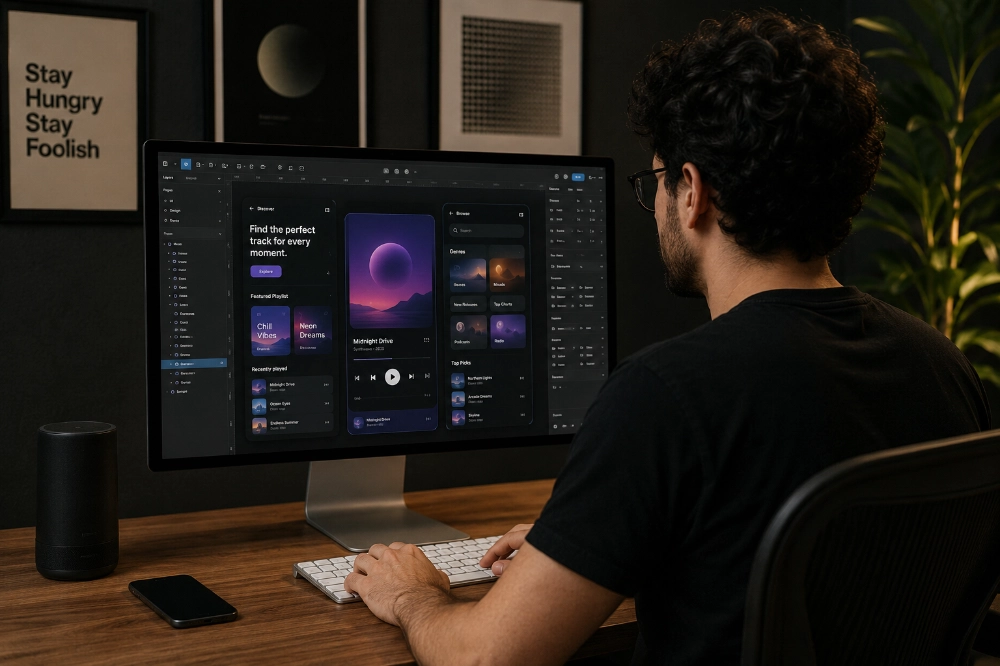
Learn from the studio mindset
Guided by working designers building practical digital experiences.
You learn through mentors who think beyond surface-level screens. The training stays connected to product thinking, interface craft, collaboration habits, and the kind of quality real teams expect.
That means feedback is not generic. You are pushed toward stronger decisions, clearer presentation, and work that feels more credible in portfolios and interviews.
Related Articles
All Articles
FAQ
Everything you may want to know before you join.
This program is designed for beginners, students, career switchers, freelancers, and aspiring designers who want structured UI/UX learning with practical projects, Figma workflow depth, and AI-assisted design thinking.
No prior professional experience is required. The course is structured to help learners build foundations first, then move into flows, interface design, prototyping, testing, and portfolio-facing output.
Yes. The curriculum includes Figma essentials, interface design workflow, prototyping, and AI-assisted modules that help you work faster and think more clearly during the design process.
By the end of the program, you should have stronger design fundamentals, guided project work, portfolio-oriented output, better understanding of UX process, and more confidence presenting your work.
No. The program is designed around applied learning, assignments, workflow thinking, practical critique, and building work that feels closer to real product design expectations.