
All Courses
Code-focused implementation track
Frontend Development for Designers + AI Coding Program
Understand how designs translate into responsive, real-world frontend experiences.
Best for: Students, Career Switchers and Freelancers.
- 12 core modules
- 4 months
- Offline
- Beginner to intermediate


Google Certified Mentor

Industry-Relevant Skills
Design to build workflow
Practical Frontend Development with AI
Many designers create beautiful screens but struggle to understand how those designs behave in real products. This program helps bridge the gap between design and development by teaching responsive layouts, frontend fundamentals, implementation thinking, and modern AI-powered coding workflows.
Semantic HTML
Learn how to structure interfaces using clean, accessible, and meaningful markup.
Modern CSS
Create responsive layouts using Flexbox, Grid, styling systems, and modern frontend techniques.

Responsive Design
Understand how interfaces adapt across devices, screen sizes, and real-world environments.

UI Components
Build reusable interface elements and practical frontend patterns used in modern websites.

Design-to-Code Workflow
Learn how to translate Figma designs into responsive frontend experiences with greater accuracy.
AI-Assisted Coding
Use modern AI tools to speed up coding, improve productivity, debug issues, and enhance workflows.
What you'll build
Learn Frontend Through a Designer's Perspective
This program focuses on helping designers and creative professionals understand implementation, responsive behavior, and real-world frontend workflows. You'll learn how design decisions impact development, usability, performance, and user experience.
Ready to build with confidence?
Move from design-only thinking to stronger implementation awareness through structured, practical learning.
Apply for the Next Batch- 1.Web Fundamentals & Design-to-Code ThinkingFoundation
- 2.HTML Structure & Semantic MarkupFoundation
- 3.CSS Fundamentals & Styling SystemsFoundation
- 4.Responsive Layouts with Flexbox & GridImplementation
- 5.Modern UI Components & BootstrapImplementation
- 6.Micro Interactions & CSS AnimationsAI Assisted
- 7.Figma to HTML WorkflowAI Assisted
- 8.Third-Party Plugins & UI EnhancementsHybrid
- 9.Version Control with Git & GitHubFoundation
- 10.Hosting, Domains & Website DeploymentImplementation
- 11.WordPress & Elementor IntroductionHybrid
- 12.Frontend Capstone ProjectReal-World Application
Who is it for
For learners who want to understand how digital experiences are built.
Whether you're starting your journey or expanding your skill set, this program helps you understand how design, code, and user experience come together in real products.

UI Designers
Strengthen implementation awareness and improve collaboration with developers.

Students
Build practical frontend skills that complement design and creative disciplines.

Freelancers
Deliver more complete website and interface solutions for clients.

Career Switchers
Develop modern frontend skills and gain confidence working with digital products.
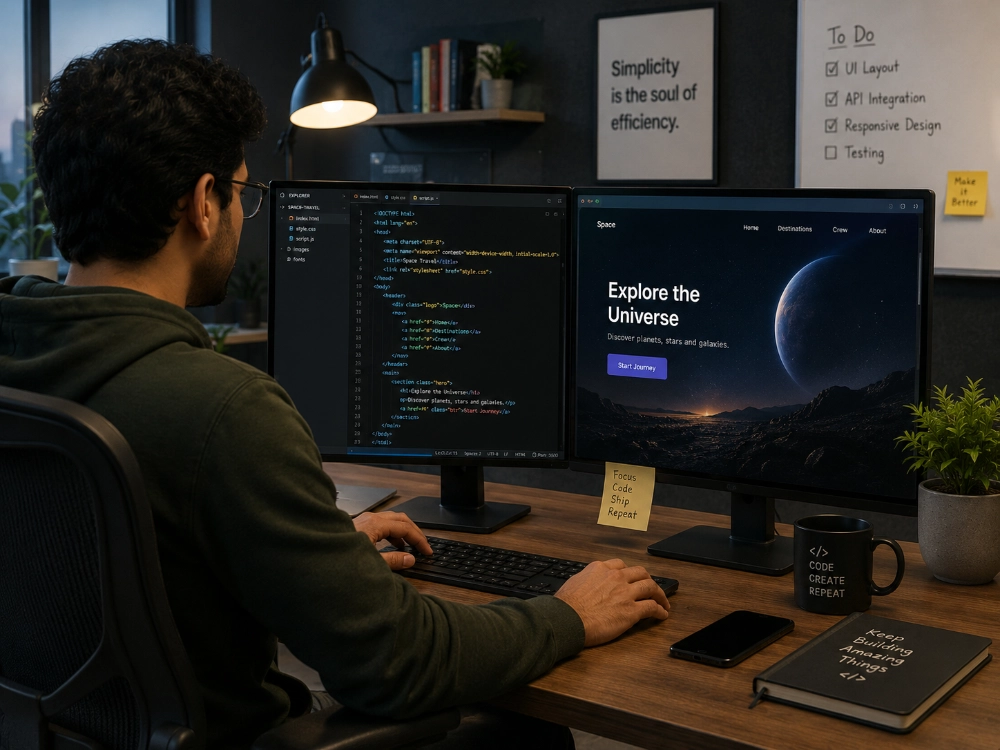
Learn from implementation-aware mentors
Understand how strong frontend work is shaped in real delivery environments.
This track is designed for designers who want to think more clearly about build quality, responsive behavior, and the bridge between polished design and cleaner code output.
The result is a more grounded workflow where design intent survives handoff better and you gain more confidence discussing implementation decisions.
Related Articles
All Articles
FAQ
Everything you may want to know before you join.
This course is ideal for designers, students, freelancers, and creative professionals who want to understand how design translates into responsive frontend implementation.
No advanced coding experience is required. The course starts with HTML and CSS fundamentals and builds toward responsive frontend structure and practical design-to-code understanding.
Yes. A major goal of the course is to help designers understand structure, spacing systems, responsive behavior, and implementation constraints so handoff becomes clearer and more practical.
The course covers HTML, CSS, responsive development thinking, component-minded structure, Figma-to-code interpretation, and AI-assisted frontend workflow awareness.
You should leave with stronger implementation awareness, better responsive thinking, improved design-to-build communication, and more confidence working closer to frontend delivery.