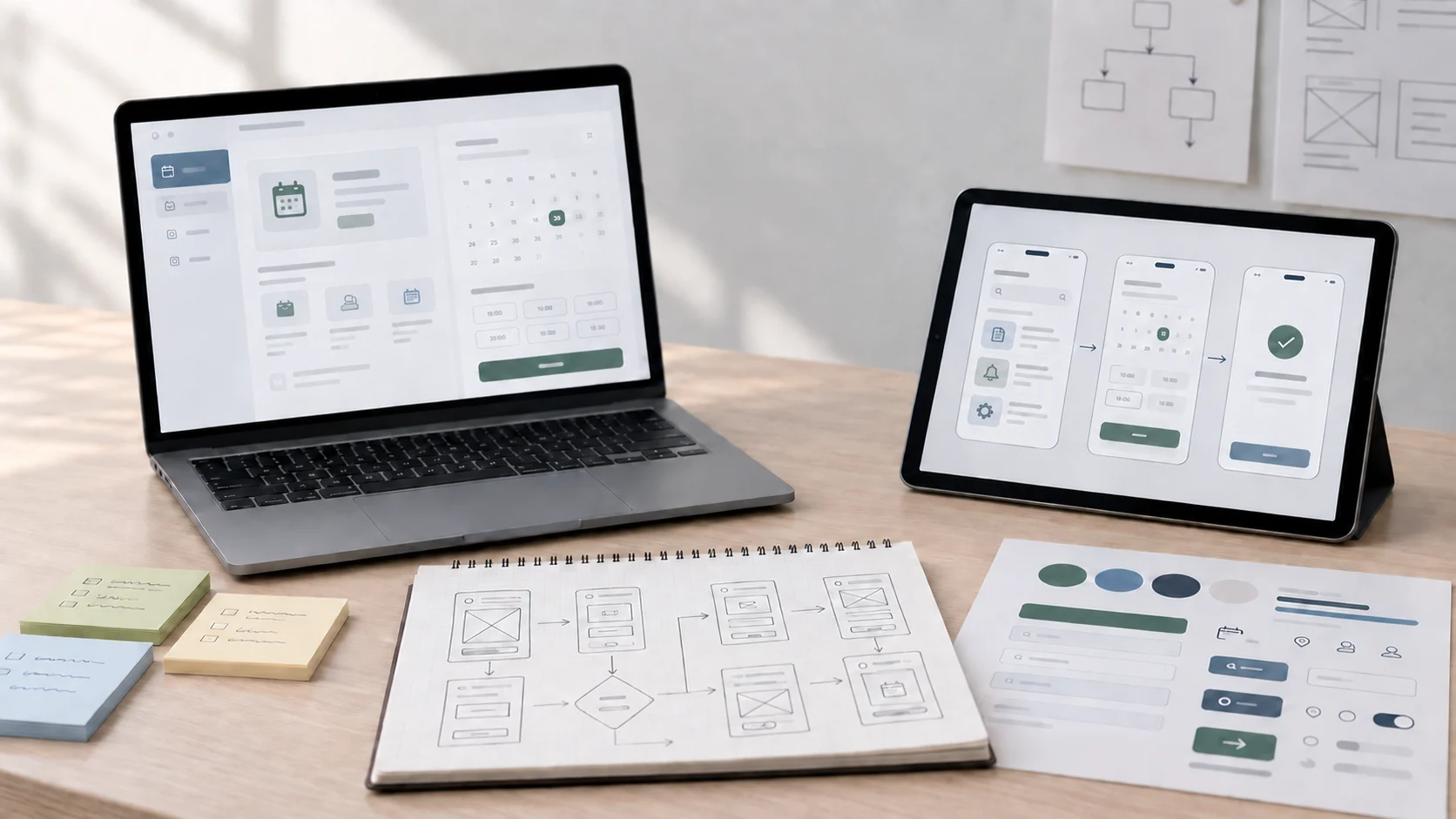
Frontend development is still worth learning in 2026, but the reason has changed. The old version of the pitch was mostly about learning to code websites. The stronger version now is about learning how digital products actually become usable, polished, interactive experiences that people trust enough to use, buy from, or return to.
That shift matters because AI has changed the conversation. Many beginners now wonder whether frontend is becoming less valuable because tools can generate layouts, components, and even chunks of code. In reality, AI has made shallow frontend work easier to generate, but it has made strong frontend judgment even more valuable.
If you want a practical path into that kind of work, a structured program like the Frontend Development for Designers can be a strong starting point because it connects visual thinking, implementation skills, and AI-assisted workflows instead of treating them as separate worlds.
01 Why Frontend Development Still Matters
Every digital business still needs interfaces. Websites, landing pages, dashboards, ecommerce experiences, educational platforms, and SaaS products all depend on how well the frontend works. A company can have a strong backend or a useful idea, but if the interface feels confusing, slow, broken, or untrustworthy, users still leave.
That is why frontend remains important. It sits at the point where business goals, product strategy, design intent, and user behavior all meet. Good frontend work is not decoration. It directly affects clarity, conversion, retention, and user confidence.
"AI can generate screens. Strong frontend developers turn screens into experiences that actually work."
02 What Has Changed in 2026
Frontend development has not disappeared. It has become more layered. Employers increasingly expect developers to understand responsiveness, accessibility, component systems, performance, collaboration with design, and AI-assisted workflows. The role now rewards people who can make better decisions, not just type more code.
This is one reason generic tutorial knowledge is often not enough anymore. Knowing syntax matters, but employers and clients care more about whether you can build clean sections, reusable UI, meaningful interactions, and real user-facing quality. That is especially true when working with modern design systems or shipping marketing pages that need to perform well across devices.
What Modern Frontend Employers Usually Value
- Strong HTML, CSS, and JavaScript fundamentals
- Responsive implementation across devices
- Accessibility and semantic structure
- Component-based thinking
- Ability to work with Figma or UI references
- Debugging, refinement, and visual accuracy
- Comfort using AI without lowering quality
03 Is AI a Threat or an Advantage?
AI is both a filter and an amplifier. It filters out people who only want to copy basic code without understanding it. At the same time, it amplifies developers who already know what they are building and why. If you understand layout, states, hierarchy, accessibility, and browser behavior, AI can speed you up. If you do not, AI can make you confidently wrong much faster.
That is the key difference. AI does not remove the frontend role. It changes the skill ceiling. Teams still need people who can review output, spot weak structure, fix edge cases, improve readability, and make interfaces feel production-ready. The value shifts from raw typing speed toward quality control and implementation judgment. If you want the deeper version of that question, the related article on whether AI will replace frontend developers explores the replacement fear more directly.
This broader pattern is similar to what many learners are noticing in adjacent digital fields too, which is why learning AI now for your career is becoming less about hype and more about staying effective inside modern workflows.
04 What Salary Really Depends On
Salary is one of the biggest reasons people still consider frontend development, but there is no single number that explains the role well. Frontend salary in 2026 depends heavily on geography, remote access, product complexity, communication ability, and whether someone is doing basic page production or higher-value interface work.
In practice, the better-paid frontend developers are usually the ones who can do more than convert a mockup into a page. They can think through edge cases, improve component consistency, collaborate with designers, handle responsive behavior, and make decisions that reduce friction for users and product teams.
Skills That Usually Improve Frontend Earning Power
- Deep CSS and responsive design ability
- Clean JavaScript thinking and problem solving
- Framework fluency with real project experience
- Accessibility and performance awareness
- Design implementation accuracy
- Portfolio quality and project presentation
- Ability to use AI as a productivity tool, not a crutch
"Frontend salary usually rises when you move from code execution alone to product-aware implementation."
05 Career Opportunities Are Still Broad
One reason frontend remains practical is that it opens more than one path. Some people start with marketing sites and landing pages. Others move into SaaS dashboards, design systems, ecommerce, no-code assisted builds, product UI work, or startup environments where one person may handle a wide range of user-facing features.
Freelancing can also be a real option because many businesses need frontend help before they need a full engineering team. Designers who add frontend skills often become especially valuable because they can bridge visual intent and implementation quality. That overlap is part of why learning frontend can pair well with UI and UX awareness, especially if you already care about why user experience is important.
Common Directions After Learning Frontend
- Junior Frontend Developer
- UI Developer
- Frontend Developer for startups or agencies
- Design-to-code specialist
- Landing page or conversion-focused web builder
- Freelance web interface developer
- Frontend support for product or ecommerce teams
06 Who Should Still Learn Frontend in 2026
Frontend is still a smart choice for several kinds of learners. It fits people who enjoy making visible things, problem-solving through structure, and turning ideas into interactive outcomes. It is also strong for designers who want more control over execution, career switchers who want a practical digital skill, and freelancers who want to offer more complete project delivery.
It may be less ideal for someone who dislikes detail, iteration, and constant refinement. Frontend rewards people who can care about polish without losing sight of function. If that sounds appealing, the role still offers a very real future.
07 How to Learn Frontend Without Falling Behind
The best way to learn frontend in 2026 is not to ignore AI and it is not to depend on AI for everything. The useful middle path is to learn fundamentals deeply enough that AI becomes a helper, not a substitute. That means understanding what your code does, why a layout breaks, how a component scales, and how users experience the finished interface.
A strong learning path should include HTML, CSS, JavaScript, responsive design, accessibility, version control, component thinking, and real project practice. If you want a more detailed breakdown of the actual stack behind that path, the companion article on frontend developer skills to learn in 2026 goes deeper into the skill side of the same topic cluster. If you are comparing learning environments, the broader framework in how to choose the best software training institute in Kochi can help you judge whether a program is building job-ready ability or only teaching surface-level lessons.
A Better Frontend Learning Stack for 2026
- Learn HTML and CSS until layouts feel intuitive
- Use JavaScript to understand interaction and state
- Practice recreating real UI sections from references
- Study accessibility and semantic structure early
- Use AI to accelerate drafts, not skip understanding
- Build a portfolio with complete, polished projects
08 The Real Answer
Frontend development is still worth learning in 2026 because the internet still runs on interfaces, and businesses still need people who can build those interfaces well. What has changed is that basic execution alone is less defensible than it used to be. The winning combination now is fundamentals, implementation quality, AI awareness, and enough product sense to make better decisions than a generic code generator can make on its own.
That is good news for serious learners. It means frontend is still full of opportunity, but the opportunity now belongs more clearly to people who want to understand the craft instead of skimming the surface.
Learning frontend in 2026 is still a smart move if you want a skill that stays close to real products, visible outcomes, and growing digital demand. Salary potential remains strong when you build depth, AI becomes an advantage when you use it thoughtfully, and career opportunities remain broad for people who can turn design intent into reliable user-facing experiences.
FAQ
Common questions about Is Frontend Development Still Worth Learning in 2026? Salary, AI & Career Opportunities
A quick summary of the most common questions readers have about this topic.
Yes. Frontend development is still a strong career in 2026 because companies continue to need people who can build usable, responsive, accessible, and conversion-friendly digital experiences.
AI can speed up repetitive coding and generate starting points, but it does not replace the need for developers who understand product goals, user behavior, design systems, performance, accessibility, and debugging.
Salary usually depends on experience, product thinking, framework depth, communication skills, portfolio quality, and whether you can handle modern workflows such as AI-assisted development and design-to-code collaboration.
Yes. Many strong frontend developers come from non-traditional backgrounds. A practical learning path, solid projects, and consistent execution matter more than having a specific degree.
The best path combines HTML, CSS, JavaScript, responsive design, accessibility, UI implementation, Git, portfolio projects, and modern AI-assisted workflow habits instead of focusing only on isolated tutorials.