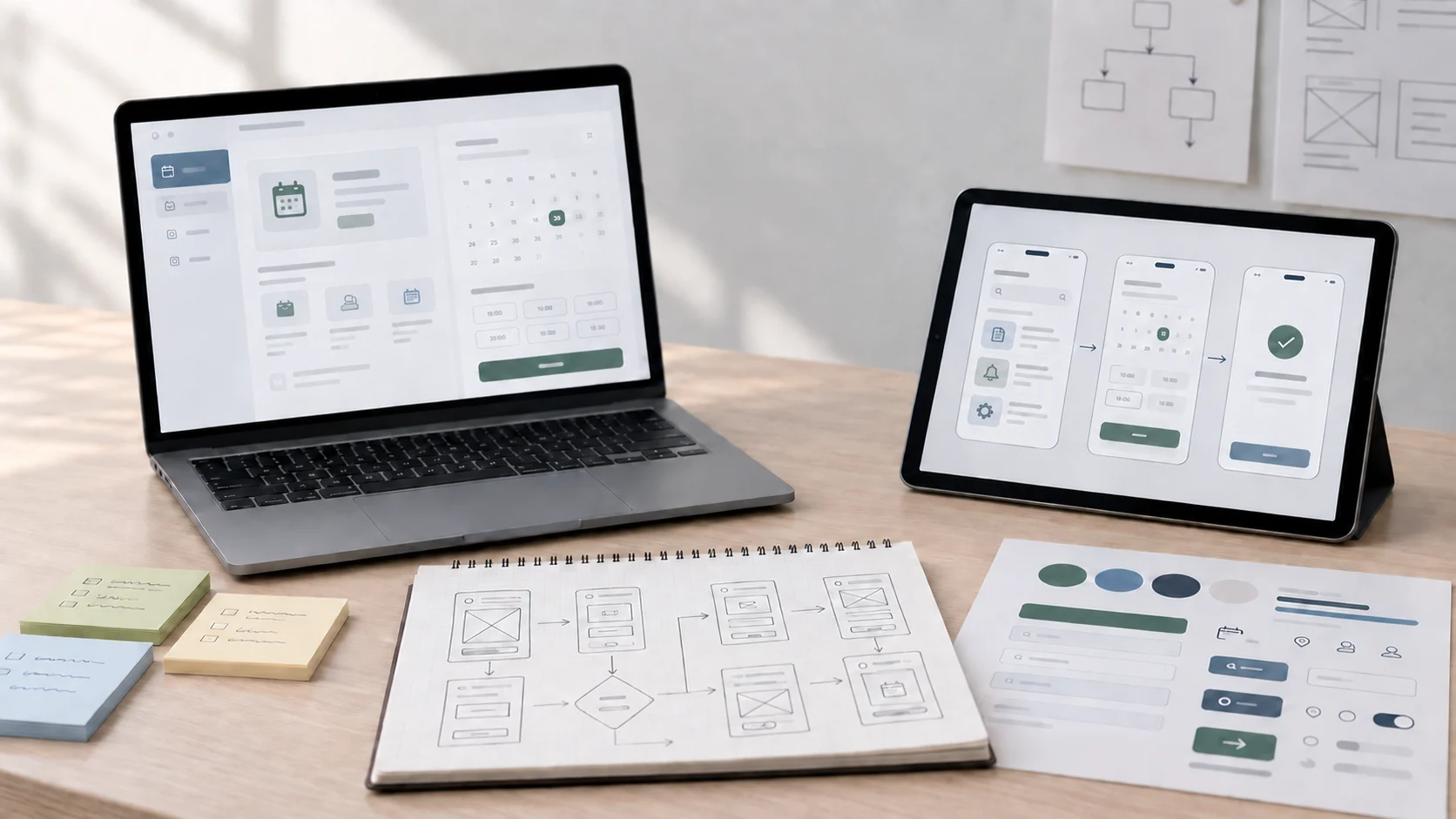
A frontend developer builds the part of a digital product that users actually see, touch, read, and navigate. That includes layout, styling, responsive behavior, interaction states, and the small implementation decisions that make an interface feel smooth or frustrating.
Many people describe frontend development too simply as "making websites look good." Visual quality is part of the job, but the role is broader than that. Frontend developers turn product ideas and designs into usable interfaces that work across devices, browsers, and real-world user conditions.
If you are exploring frontend as a career path, this article explains the role itself first. Then, if you want the next step, the companion article on frontend developer skills to learn in 2026 goes deeper into the skill stack behind the role.
01 Frontend Developers Build the User-Facing Side of Products
The clearest way to understand frontend development is this: frontend developers build the interface layer of websites and apps. They take wireframes, designs, content, and product requirements and turn them into something users can interact with in the browser.
That can include landing pages, dashboards, forms, navigation systems, content sections, cards, buttons, modals, onboarding flows, and many other UI patterns. Their work shapes how a product feels from the first click onward.
"Frontend development is where design intent becomes real user experience."
02 Their Work Usually Starts With HTML, CSS, and JavaScript
Most frontend work is grounded in three core technologies: HTML for structure, CSS for styling and layout, and JavaScript for behavior and interaction. Even when developers use frameworks, those fundamentals still drive the final result.
That is why strong frontend developers do more than assemble components. They understand semantic structure, spacing systems, interaction logic, and how browsers interpret code. Those fundamentals are a big reason frontend development is still worth learning in 2026 for people who want practical digital building skills.
Core Technologies Behind Frontend Work
- HTML for page structure and semantics
- CSS for layout, visual styling, and responsiveness
- JavaScript for interaction and dynamic behavior
- Frameworks and component systems for scaling UI work
- Git for version control and collaboration
03 Frontend Developers Make Interfaces Responsive
One of the most important responsibilities in frontend work is making sure an interface holds up across screen sizes. A design that looks polished on a laptop but breaks on a phone is not finished work. Frontend developers adjust layout, spacing, typography, navigation, and interaction patterns so the experience stays usable everywhere.
Responsive implementation is one of the strongest differences between beginner-level and professional-level frontend execution. It requires both technical skill and visual judgment.
04 They Also Handle Interaction, State, and UI Behavior
Frontend developers are responsible for more than static screens. They build behavior into the interface. That can mean dropdowns, tabs, filters, form validation, loading states, error messages, search interactions, and multi-step user flows.
This side of the role matters because users experience products through behavior, not just visuals. A screen can look clean and still feel broken if the states are confusing, inconsistent, or fragile.
Common Frontend Responsibilities in Daily Work
- Building layouts from wireframes or designs
- Creating reusable UI components
- Handling interface interactions and state changes
- Testing responsiveness across devices
- Fixing UI bugs and browser inconsistencies
- Improving clarity, polish, and usability
05 Accessibility Is Part of the Job Too
Good frontend developers think about accessibility from the beginning. That means using proper structure, clear focus states, readable contrast, form labels, keyboard navigation, and interaction patterns that work for more people.
This responsibility matters because frontend is directly connected to the user experience. If you want to understand that connection more clearly, the related article on why user experience is important explains why interface quality affects trust, comfort, and business outcomes.
"If users cannot comfortably navigate the interface, the frontend is not truly finished."
06 Frontend Developers Collaborate With Designers and Product Teams
Frontend work is rarely isolated. Developers often work closely with UI or UX designers, product managers, content teams, and sometimes backend developers. They help translate ideas into implementation, flag feasibility issues, and refine interface details when designs meet real constraints.
That means communication is part of the role. A strong frontend developer can explain tradeoffs, ask better implementation questions, and help protect the quality of the final experience instead of only following tickets mechanically.
07 Modern Frontend Work Includes Debugging, Optimization, and AI-Assisted Workflow
Frontend developers spend a meaningful part of their time debugging issues, refining layouts, improving performance, and keeping interfaces stable as products evolve. In modern teams, they may also use AI tools to generate drafts, speed up repetitive tasks, or help inspect bugs faster.
But AI does not remove the need for judgment. The broader question of whether AI will replace frontend developers matters here because AI can assist with implementation, while humans still need to review, correct, and improve what gets shipped.
What Makes a Frontend Developer Valuable Today
- Strong fundamentals in HTML, CSS, and JavaScript
- Responsive and accessible implementation quality
- Ability to debug real interface problems
- Clear collaboration with design and product teams
- Good judgment when using AI inside the workflow
08 So What Does a Frontend Developer Really Do?
In practical terms, a frontend developer builds the visible product experience. They turn design and product intent into pages, components, interactions, and responsive systems that users can actually trust and use. They help make products not just functional, but understandable and comfortable.
That is why frontend development is such a useful role for beginners and career switchers. It sits close to creativity, logic, interface thinking, and hands-on execution. If you want a guided path into this kind of work, the Frontend Development for Designers course is the most directly relevant training path currently on the site.
A frontend developer does much more than decorate screens. The role combines structure, styling, responsiveness, interaction logic, accessibility, debugging, and collaboration to create the part of a product people actually experience. When done well, frontend development turns static ideas into digital experiences that feel clear, polished, and human-centered.
FAQ
Common questions about What Does a Frontend Developer Do? Roles, Skills & Responsibilities Explained
A quick summary of the most common questions readers have about this topic.
A frontend developer builds the parts of a website or app that users see and interact with, including layout, styling, responsiveness, interface behavior, and usability.
A frontend developer does not need to be a full UI designer, but understanding layout, spacing, responsiveness, and user experience makes implementation much stronger.
HTML, CSS, JavaScript, responsive design, accessibility, debugging, component thinking, version control, and collaboration are some of the most important frontend skills.
No. Frontend development also includes structure, performance, accessibility, interaction logic, cross-device behavior, and making interfaces feel clear and reliable.
Yes. Many beginners start with frontend first because it teaches interface building, browser fundamentals, and practical coding skills without requiring backend knowledge immediately.