AI can produce a polished persona in seconds. That speed is useful—and dangerous. If the tool has not been grounded in real research, the result may be a convincing fictional character rather than a reliable picture of users.
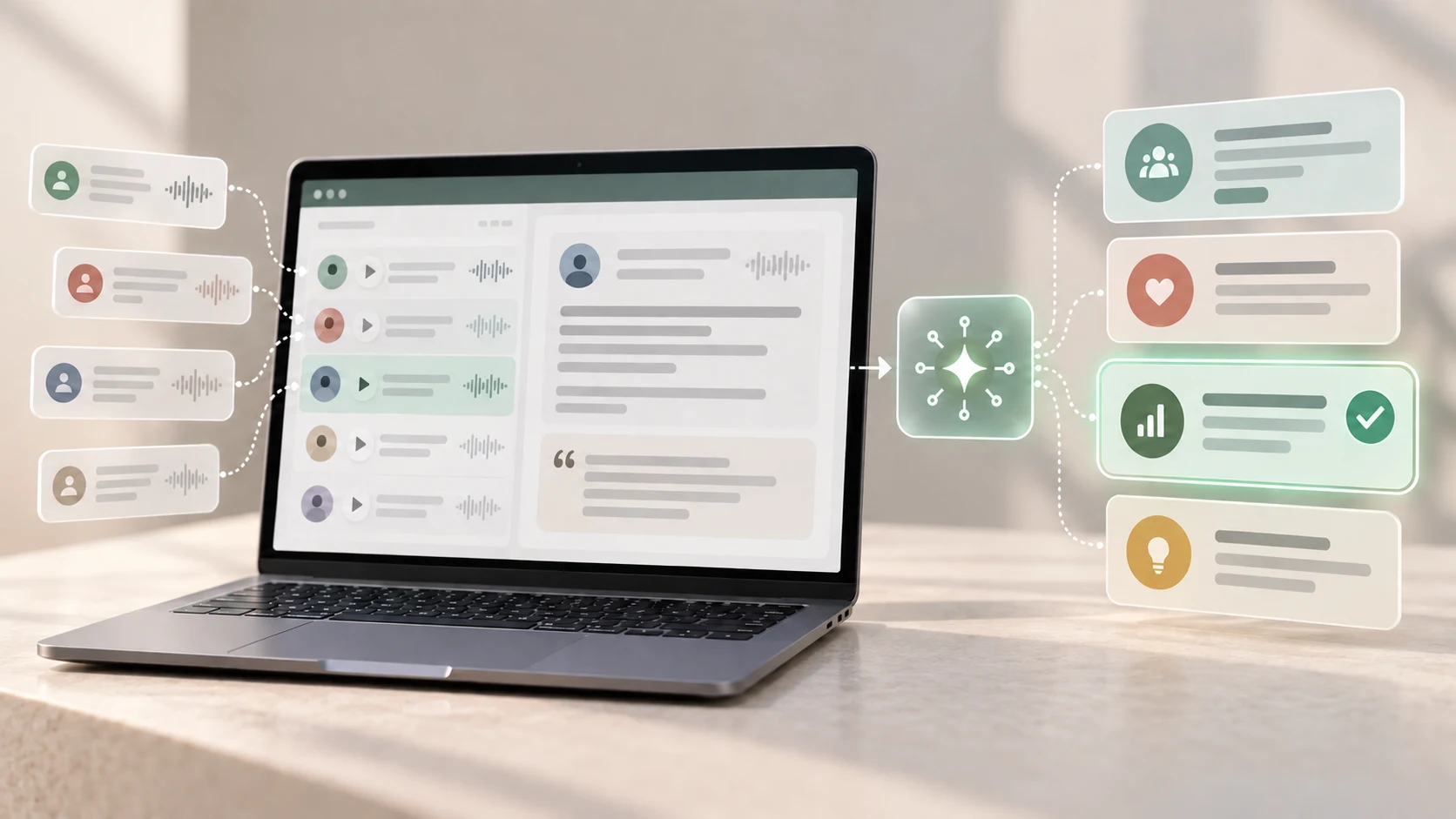
The responsible way to use AI for UX user personas is to let it organise, draft and challenge research-backed patterns while a human remains accountable for the evidence and final decisions. AI can reduce repetitive synthesis work, but it cannot interview your users, observe their context or decide which differences matter.
This guide is for UX beginners, students, researchers and designers who already have research material—or want to learn the right workflow before collecting it. If personas are new to you, first read what a user persona is and how designers create one.
AI-assisted persona workflow at a glance
- Define the decision the persona needs to support.
- Use approved, minimised and de-identified research evidence.
- Ask AI to group patterns with source references, not invent a person.
- Challenge every theme with contradictions and missing context.
- Write only details that can affect a design choice.
- Validate the draft with researchers, stakeholders and new user evidence.
01 What can AI actually help with?
Persona work includes several different tasks. Some are mechanical: cleaning note formats, sorting observations, comparing repeated phrases and producing a first draft. Others require judgment: deciding whether a pattern is meaningful, understanding why it occurred and determining whether it should change the product. AI is most useful in the first group and should support—not own—the second.
With an appropriate data workflow, AI can help a designer:
- reformat de-identified research notes into a consistent structure;
- suggest clusters of similar goals, behaviours or constraints;
- compare evidence that supports and contradicts a proposed pattern;
- turn verified themes into a concise persona draft;
- find vague, duplicated or irrelevant fields in an existing persona;
- generate alternative wording for different collaborators; and
- create questions for the next round of research.
AI cannot establish that a pattern is true merely by writing it fluently. It does not know what happened outside the information supplied to it. It may merge different participants, fill gaps with familiar stereotypes or treat a rare comment as a common need. The designer must keep a visible path from every important persona claim back to the research.
02 Start with evidence, not a persona prompt
A common mistake is to begin with “Create a persona for a 25-year-old student who wants to learn design.” The response may look complete, but most of its motivations, habits and frustrations will be model-generated. That can be useful as a proto-persona—a documented hypothesis—but it is not evidence about real students.
Begin instead with a design decision and research material. The decision might be how to present course timing, how to structure an onboarding journey or which information should appear before an enquiry form. Relevant evidence might come from interviews, contextual observation, usability tests, support records, surveys or product analytics. Each source answers different questions, so record what it can and cannot show.
Before using any AI tool, check consent, organisational policy, access, data handling and retention. Remove names, contact details and unnecessary identifying context. De-identification is more than deleting a name: an unusual employer, location, role or personal situation may still identify someone. When in doubt, use fictional practice material until the workflow is approved.
For a fuller foundation, review the UX research methods and process beginners should understand and how AI can support UX research responsibly.
03 A step-by-step AI-assisted persona workflow
1. Define the scope and decision
Write one sentence describing what the team needs to decide. Then state which users, journey and context are in scope. This keeps the persona focused. A persona for comparing a course may need goals, schedule constraints and decision behaviour; it probably does not need favourite brands or a personality label.
2. Prepare a source table
Create a simple table with a neutral source ID, an observation, its context, the research method and any limitation. Separate what happened from what you think it means. “P03 opened the schedule before the curriculum” is an observation. “Working learners prioritise flexibility” is an interpretation that needs broader support.
3. Ask AI to propose patterns with traceability
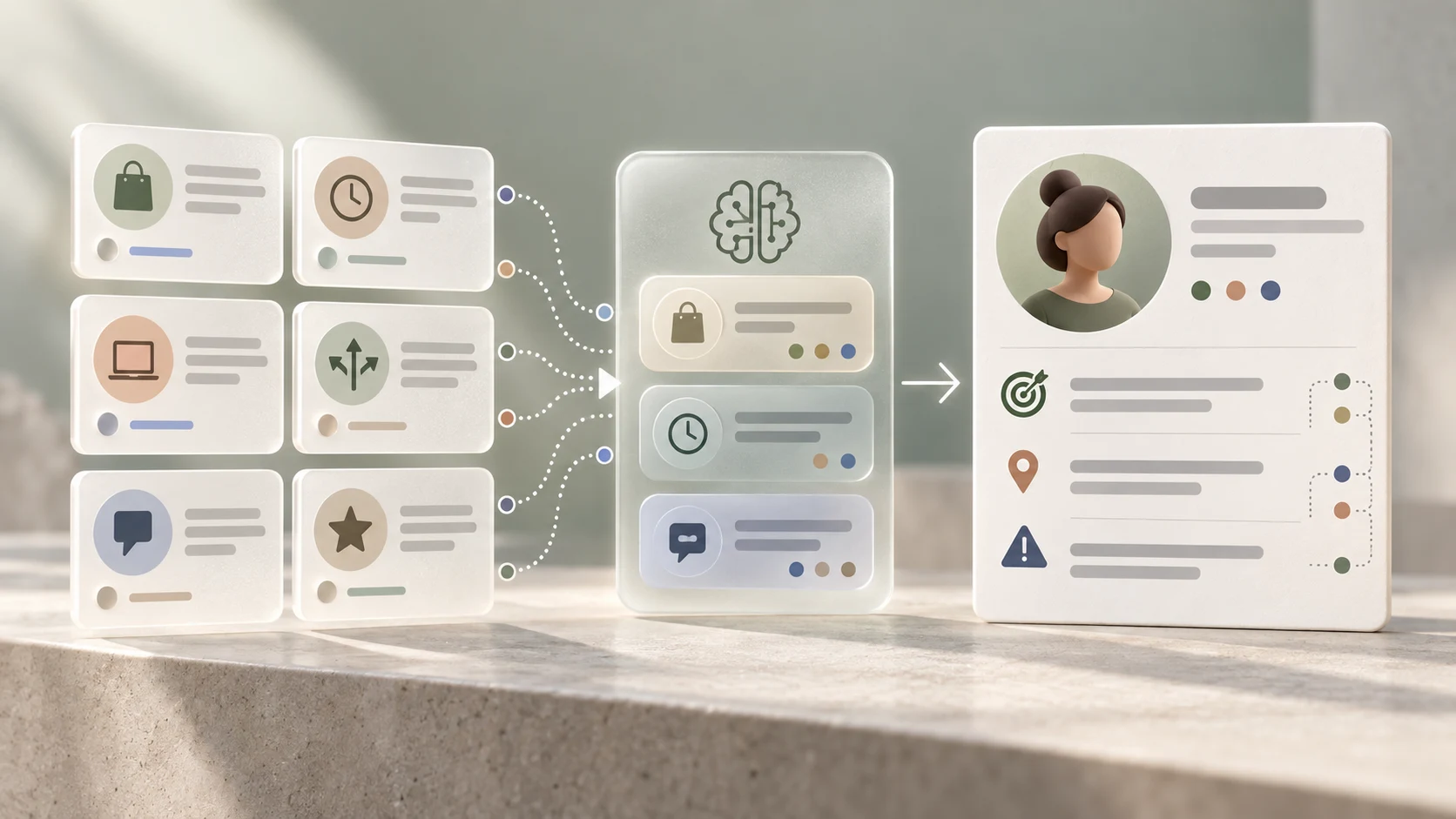
Provide only the approved material and ask for candidate patterns. Require the output to list the source IDs supporting each pattern, contradictory evidence, unanswered questions and a confidence note. This structure makes the response easier to audit than a polished persona generated in one step.
4. Review the clusters manually
Return to the original notes. Check whether the tool preserved context, combined unrelated behaviours or overlooked an important exception. Frequency is not the only measure of importance: a less common accessibility barrier or failure in a critical journey may still deserve attention.
5. Decide which patterns require separate personas
Separate groups only when their differences would lead to different design decisions. Two groups with different ages but the same goal, context and behaviour may not need separate personas. Two groups with similar demographics but different levels of confidence or support needs might.
6. Draft the persona from verified fields
Ask AI to write a concise draft using only the themes you approved. Useful fields include the person's relevant context, primary goal, behaviour, needs, constraints, pain points and a short scenario. Instruct the tool to mark missing information instead of completing it. Add an evidence note or source reference for each important claim.
7. Edit for action and clarity
Remove any detail that does not help the team decide or design. Replace generic statements such as “values convenience” with specific behaviour such as “checks weekly timing before comparing modules.” Do not use an AI-generated quotation as though a participant said it. Use a plain-language summary unless a genuine quotation is approved and accurately sourced.
8. Validate and maintain the persona
Review the draft with the researcher and relevant collaborators. Test it against new studies and actual product behaviour. Record what changed, why it changed and when the persona should be reviewed again. A persona is a working model, not a permanent fact.
04 A prompt structure that keeps AI grounded
A good prompt cannot repair weak research, but it can make the tool's role and limits explicit. Use a structure like this:
Evidence-first prompt framework
- Role: Help organise the supplied UX research; do not act as a user.
- Decision: State the product decision and journey in scope.
- Evidence: Provide approved observations with stable source IDs.
- Task: Propose behaviour-based patterns, not demographic characters.
- Output: For each pattern, list supporting sources, contradictions, gaps and uncertainty.
- Boundary: Do not invent facts, quotations, participants or missing details.
Run the work in stages. First ask for candidate patterns. Review them. Then ask for a persona draft based only on the approved patterns. Finally, ask the tool to critique the draft. A one-shot prompt hides too many decisions inside a smooth answer.
05 How to refine an existing persona with AI
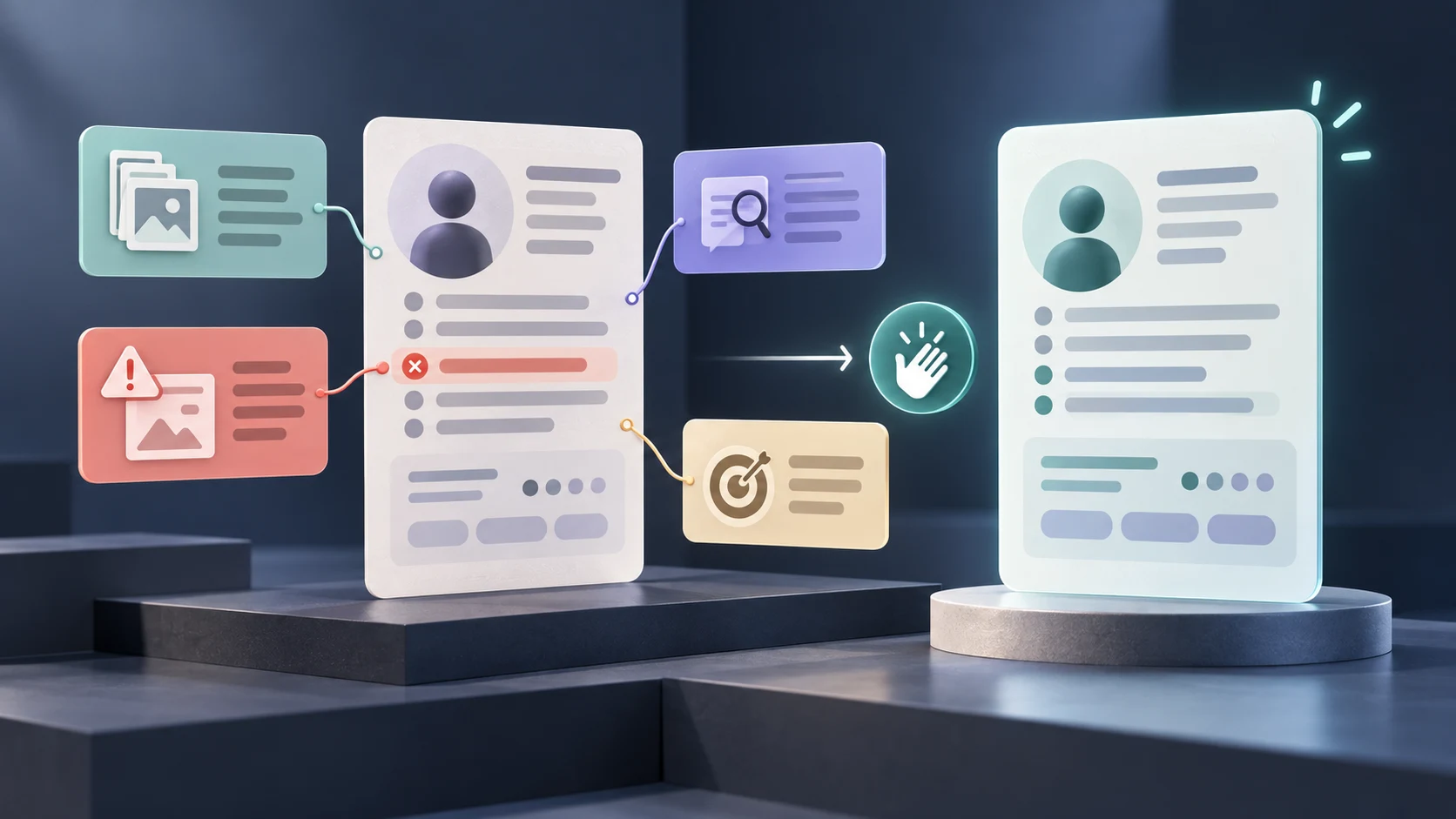
An existing persona may be more difficult to review than a new one because familiar details can feel true. AI can act as a structured critic if you provide the persona, its source notes and clear review criteria.
Ask the tool to produce a field-by-field audit:
- Evidence: Which sources support this claim?
- Relevance: Which product or design decision could it influence?
- Specificity: Is the statement observable and precise, or vague?
- Contradiction: Which sources challenge or qualify it?
- Risk: Could it encode a stereotype, expose private information or create false certainty?
- Action: Keep, rewrite, combine, investigate or remove.
The output is a review aid, not the final audit. A person should verify every source reference and decide which changes are justified. If the original evidence is missing, label the persona as unverified and plan research rather than asking AI to reconstruct a believable foundation.
06 Example: refining a course-comparison persona
Imagine a fictional training website has a persona called “Career Switcher Anu.” The card says she is 27, lives in a city, loves creativity, fears technology and prefers weekend classes. The team cannot find research supporting most of those details.
The researcher prepares de-identified notes from interviews and task-based sessions. The evidence shows a recurring behaviour: several participants check weekly timing before the curriculum because they need to judge whether learning can fit around work. Some also look for the sequence of practical projects before deciding whether to enquire. One participant prefers weekdays, so “prefers weekends” is not a reliable group claim.
AI helps group the observations and drafts a more useful persona around schedule confidence, comparison behaviour and the need to understand how projects build toward a portfolio. It flags the unsupported demographic and personality details for removal. The researcher verifies each source, preserves the weekday contradiction and rewrites the persona as a behavioural pattern rather than a biography.
The revised persona can now guide concrete questions: Should weekly timing appear earlier? Are course duration and class timing clearly distinguished? Does the curriculum make the practical sequence easy to scan? This is an illustrative example, not a report of Zolve Academy research, learner feedback or measured results.
07 AI personas are not the same as research personas
The term “AI persona” is used for several different things. One is an evidence-based UX persona drafted with AI assistance. Another is a synthetic character generated from a prompt and asked to respond like a user. These are not interchangeable.
A synthetic character can help a team brainstorm assumptions, rehearse interview questions or imagine edge cases to investigate. It cannot confirm what the intended audience believes, experiences or does. Its answers are generated from the model and prompt, not observed from the people represented.
Keep labels honest:
- Research-based persona: built from traceable evidence about relevant users.
- AI-assisted persona: a research-based persona for which AI supported organisation, drafting or review.
- Proto-persona: a documented team hypothesis that still needs research.
- Synthetic persona or user: model-generated material that may support exploration but is not user evidence.
This distinction protects the team from presenting plausibility as knowledge. It also makes the next step clear: hypotheses should shape research questions, while verified patterns can shape design decisions.
08 Common mistakes and how to avoid them
- Generating the biography first: begin with the decision and evidence, then draft only the relevant profile.
- Uploading raw research by default: minimise and de-identify data, check consent and use only approved tools and accounts.
- Letting AI fill empty fields: mark gaps as unknown and research them if they matter.
- Grouping by demographics alone: prioritise behaviours, goals, context and constraints that change the experience.
- Turning paraphrases into quotations: never make generated wording look like a participant's exact statement.
- Hiding contradictory evidence: preserve differences that qualify a theme or reveal another need.
- Confusing frequency with priority: consider severity, accessibility, journey risk and research limits.
- Keeping decorative details: if a field does not affect a decision, remove it.
- Treating the persona as finished: assign an owner and update or retire it as evidence and products change.
09 Final quality checklist
Before the persona influences a design
- Can every important claim be traced to approved research evidence?
- Are observations clearly separated from interpretations?
- Does the persona represent a meaningful behaviour pattern rather than an average?
- Have contradictions, edge cases and accessibility needs been reviewed?
- Were personal and sensitive details minimised appropriately?
- Are unsupported facts, generated quotations and stereotypes absent?
- Can the team name the decisions this persona should support?
- Is uncertainty visible where the evidence is limited?
- Does someone own validation, updates and retirement?
10 How beginners can practise this skill
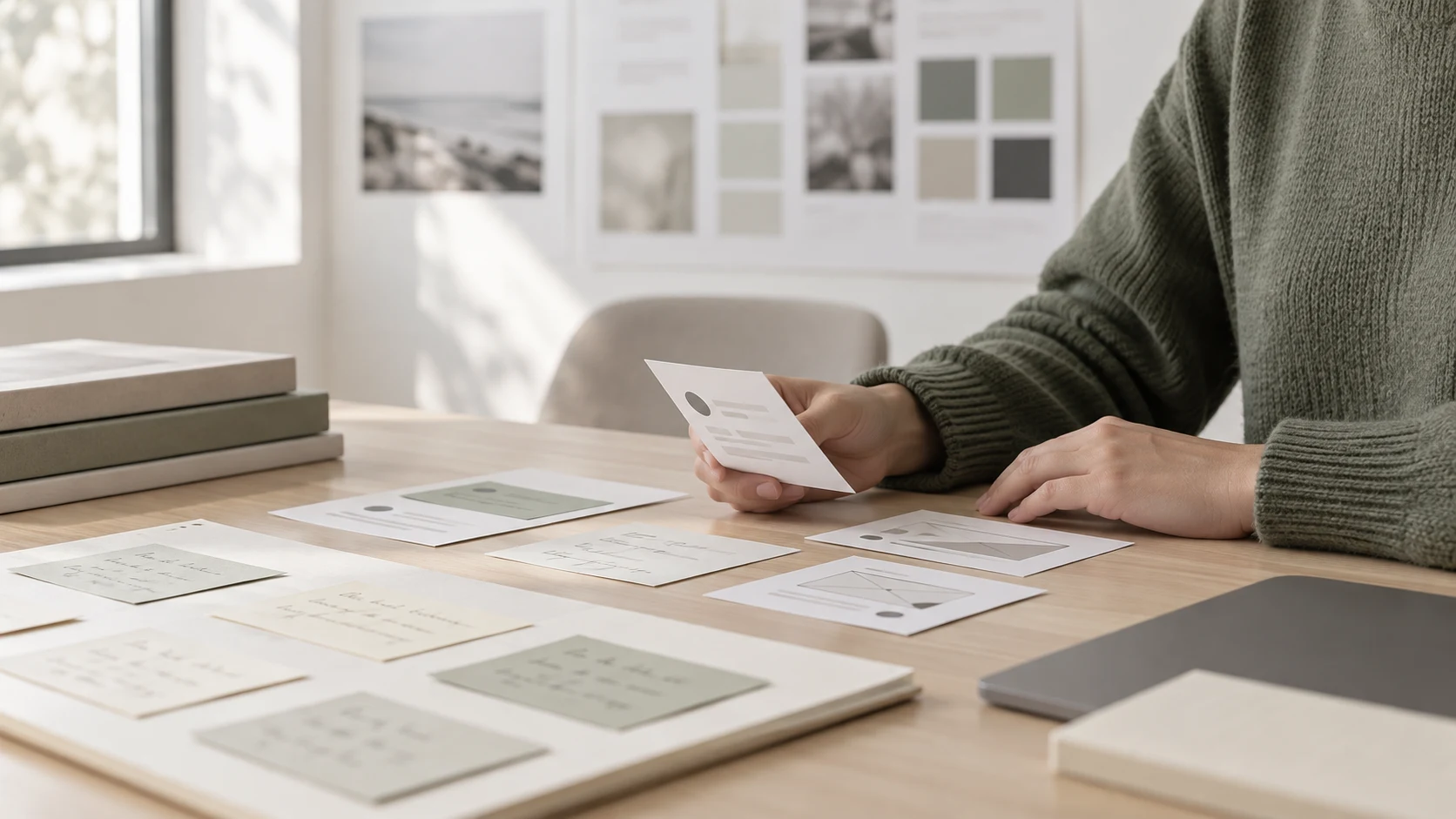
Create a small fictional study with six to eight observation cards. Include repeated behaviours, one contradiction and one piece of irrelevant demographic information. Build a persona manually, then use the AI-assisted workflow. Compare the two versions: Which evidence did the tool combine? What did it assume? Did its wording make weak evidence sound certain?
Repeat the exercise by asking AI to criticise the persona instead of writing it. This often teaches more than chasing a perfect prompt. The goal is to practise research judgment, traceability and editing—not merely to produce a polished card faster.
Used well, AI gives designers more ways to inspect evidence and communicate a verified pattern. The quality of the persona still depends on the quality of the research and the care of the person reviewing it.
Want to practise research, personas, interface design and prototyping as one connected process? Explore Zolve Academy's Professional UI/UX Design & AI-Powered Workflow Program, review the curriculum and enquire about learning when to use AI—and when to rely on your own UX judgment.
FAQ
Common questions about How to Use AI to Create and Refine UX User Personas
A quick summary of the most common questions readers have about this topic.
AI can help organise research evidence and draft a persona, but the persona is trustworthy only when a researcher verifies every important claim against real sources. An AI-generated profile without user evidence is a hypothesis, not a research-based persona.
Use approved, minimised and de-identified research material such as coded observations, interview notes, usability findings or survey themes. Include source IDs, project scope and decision context, but remove personal or sensitive details that are not necessary for the task.
No. A model can generate plausible statements, but it cannot provide the lived experience, context or observed behaviour of the people you are designing for. Synthetic personas may help expose assumptions or prepare research questions, but they should not be reported as user evidence.
Trace each goal, behaviour, pain point and constraint to source evidence; review contradictory observations; remove unsupported details; check for stereotypes; and ask whether every field changes a real design decision. Keep uncertainty visible when the evidence is limited.
Start with a fictional brief and non-sensitive notes you create yourself. Build the persona manually first, compare it with an AI-assisted draft, and record where the tool combined evidence, added assumptions or missed important differences.