A polished persona template can still mislead a team if the details came from imagination. The value of a user persona is not the photograph or fictional name—it is the research pattern behind it.
A user persona is a concise, evidence-based representation of a meaningful group of users who share relevant goals, behaviours, needs or constraints. UX designers use personas to keep product decisions connected to the people they are designing for.
This guide is for design beginners, students and career switchers who want to understand what a persona should contain, how to create one from research and how to avoid stereotypes. If research methods are new to you, begin with our beginner's guide to UX research.
A useful persona in one minute
- Represents a pattern across relevant research, not one participant.
- Focuses on goals, behaviour, context, needs and constraints.
- Includes only details that can inform a product or service decision.
- Makes the source evidence and uncertainty visible.
- Changes when new research challenges the pattern.
01 What does a user persona actually represent?
A persona represents a recurring way of approaching a relevant task. It may describe what a group is trying to achieve, what influences its decisions, the conditions in which it uses a product and the obstacles it repeatedly encounters. The persona gives that pattern a memorable form so a team can discuss it consistently.
It is fictional in presentation but should be factual in foundation. A name, illustration or short scenario may make the persona easier to remember, but those elements do not make it valid. Validity comes from traceable observations across research participants, product data or other appropriate evidence.
A persona is also not an “average user.” Averages can hide meaningful differences. For example, prospective learners comparing a course may have similar ages but very different constraints: one may need a predictable weekend schedule, while another may need to know whether the course supports a career transition. Those differences matter only if they change the journey or design response.
02 What should a UX persona include?
Include information that helps the team make the decisions in scope. A practical persona often contains:
- Context: when, where and why the person encounters the product or service.
- Primary goal: the outcome they are trying to achieve, not merely the screen they want to open.
- Relevant behaviours: how they currently approach the task, compare choices or recover from problems.
- Needs and expectations: what the experience must help them understand or do.
- Constraints: time, device, confidence, environment, access or other conditions that affect the journey.
- Pain points: recurring obstacles supported by evidence.
- Evidence notes: the research sources, sample and limitations behind the pattern.
Demographic details belong only when they are relevant to the behaviour or decision. Age, job title, income or location should not appear simply because a template has a field for them. Unnecessary detail can encourage stereotypes and distract the team from what people actually do.
Quotes require particular care. Use a real quotation only when the participant consent, attribution approach and research records allow it. Do not combine several statements into a sentence and present it as something one person said. A plain-language summary is often safer and more honest.
03 How UX designers create a user persona
1. Define the decision the persona should support
Start with the design question. Are you deciding how people compare plans, how a dashboard should prioritize information or where someone needs support in a service journey? A persona built for every possible decision will usually become vague. Clear scope helps the researcher collect relevant evidence.
2. Research the people and context
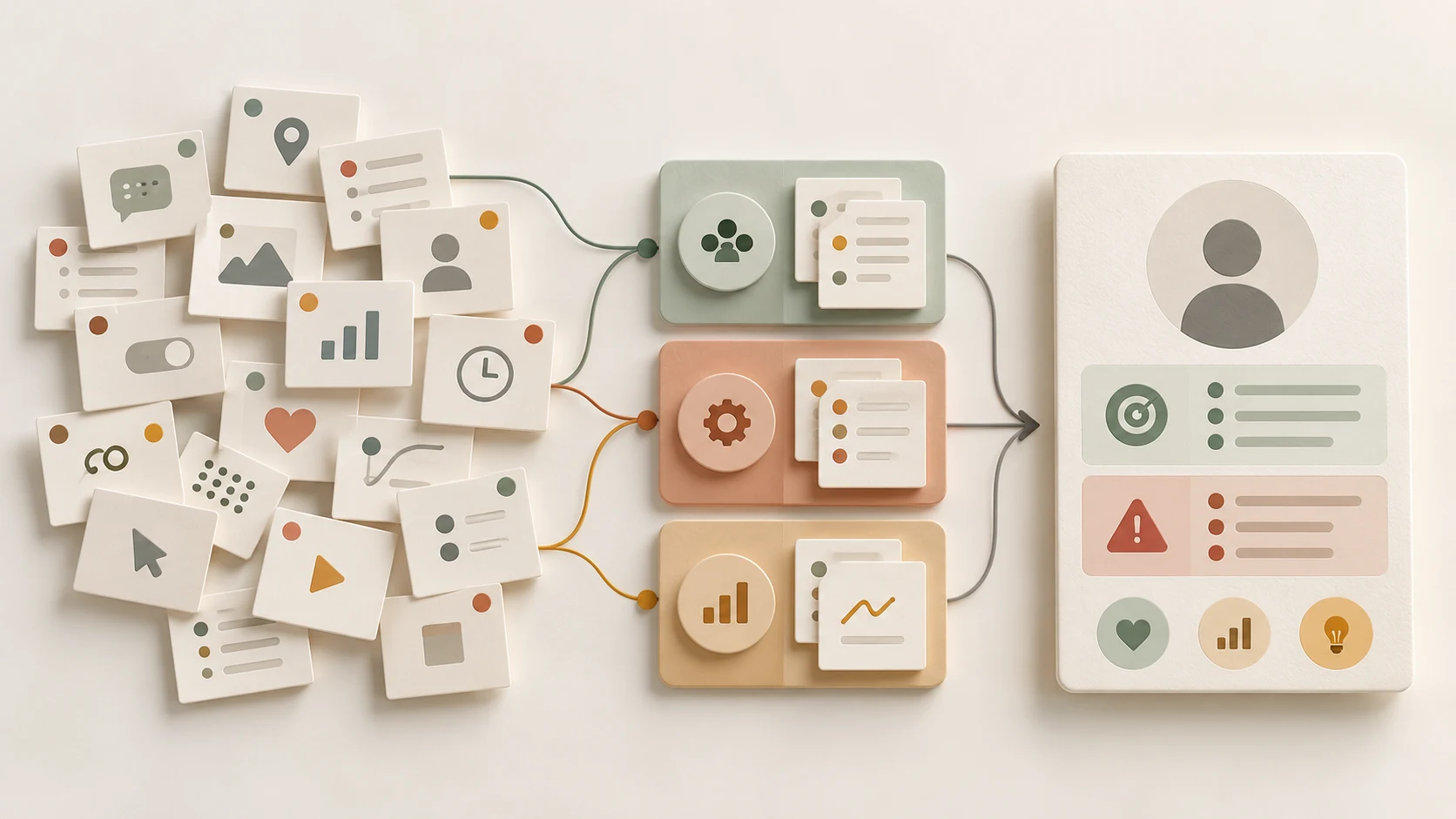
Use methods suited to the question, such as interviews, contextual observation, usability sessions, surveys or product analytics. Speak with people relevant to the intended audience, handle their information responsibly and record the limits of the sample. What people say, what they do and what product data shows may answer different questions.
3. Separate observations from interpretations
Write direct evidence before turning it into a theme. “Participant P04 compared class timing before reading the module list” is an observation. “Schedule confidence shapes course choice” is an interpretation that needs support from more evidence and context. This separation makes the persona easier to review.
4. Group patterns by behaviour and need
Look across participants for recurring goals, approaches, constraints and decision factors. Group evidence because it describes a meaningful pattern—not because the participants share a convenient demographic. Also record contradictory observations. Exceptions may expose accessibility needs, risky assumptions or a separate pattern.
5. Decide whether the patterns need separate personas
Create separate personas only when the differences would change the design. If one group needs guided explanations before acting and another confidently wants shortcuts, the interface may need to support both modes. If two proposed personas have different biographies but would use the same journey in the same way, combining them may be clearer.
6. Build the persona around actionable information
Give the persona a short, neutral identity and write the goal, behaviour, context, needs, constraints and pain points in specific language. Add a brief scenario showing when the product becomes relevant. Link important claims to research notes or a synthesis document so collaborators can examine the foundation.
7. Review, validate and update it
Ask researchers, designers and product stakeholders whether each detail is supported and useful. Check for stereotypes, invented precision and gaps in recruitment. Treat the persona as a working model: test it against new studies, revise it when evidence changes and retire it when it no longer reflects the product or audience.
04 Example: a persona for comparing design courses
Imagine a fictional education website is improving how prospective learners compare course options. Interviews and task-based sessions reveal a recurring pattern: some career switchers first check whether the timetable fits their current work, then look for evidence that the learning sequence leads to portfolio-ready practice. They hesitate when duration, weekly timing and learning format appear in different places.
A persona based on that pattern might describe a working learner whose goal is to judge whether a course is realistic before sending an enquiry. Relevant behaviours include comparing schedules across tabs, saving course pages and looking for a clear sequence of practical outcomes. Relevant constraints include limited evening time and uncertainty about unfamiliar design terminology.
The persona should not invent a salary, neighbourhood, favourite brands or personality type unless those details are supported and relevant. It can help the team ask sharper questions: Should schedule information appear earlier? Can duration and weekly commitment be distinguished more clearly? Does the curriculum explain how projects build toward a portfolio?
This is an illustrative example, not a report of Zolve Academy research, learner feedback or measured results.
05 How designers use personas in real decisions
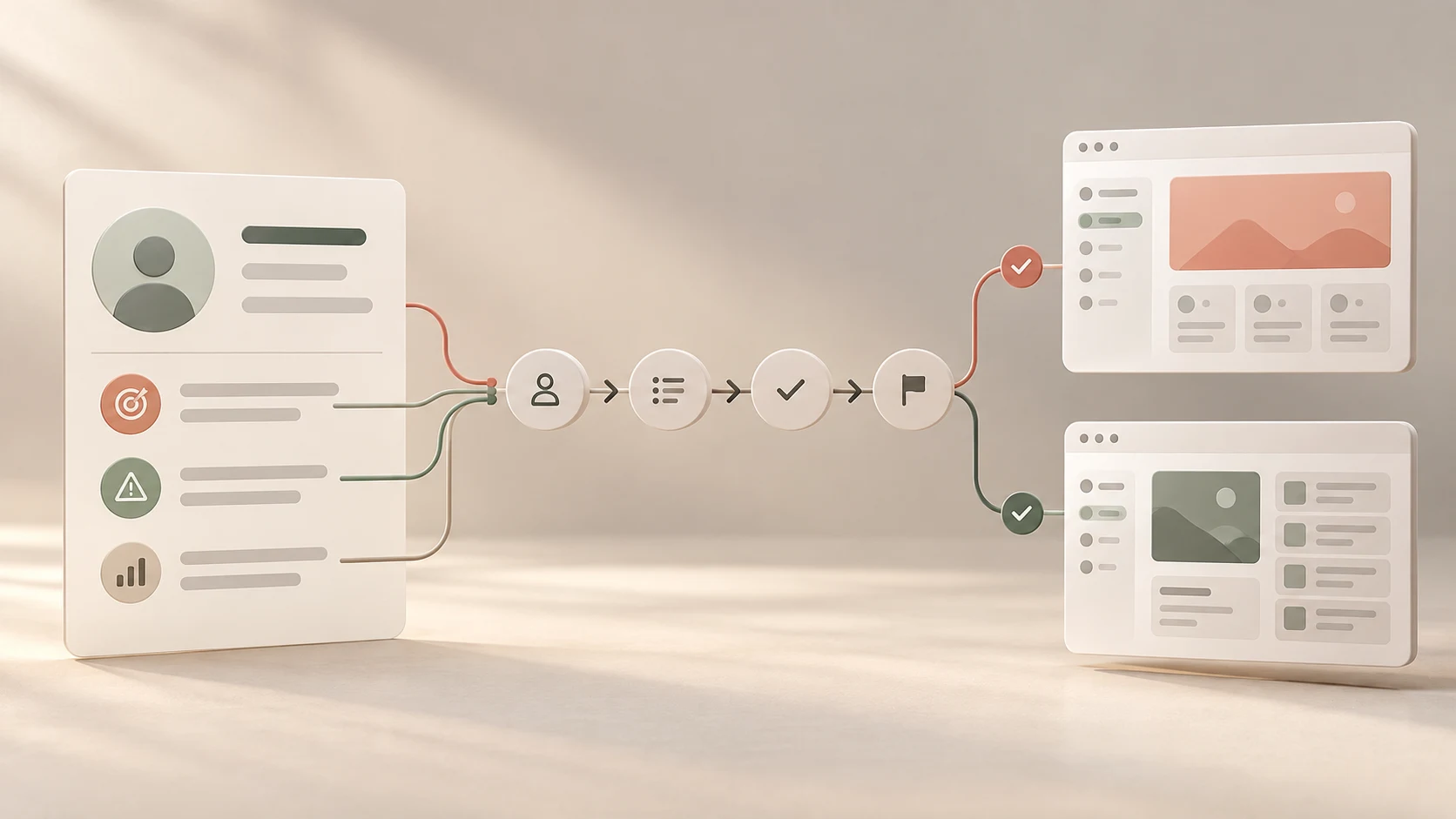
A persona earns its place when it changes or clarifies a decision. Designers can use it to:
- frame a journey around the user's goal rather than the organization's page structure;
- prioritize content that resolves a documented uncertainty;
- write realistic scenarios and tasks for usability testing;
- compare interface options against relevant needs and constraints;
- identify where different patterns require flexibility rather than one default flow; and
- explain the evidence behind a design recommendation to collaborators.
For every decision, move back from the persona to the underlying evidence. “Our persona prefers this” is not enough. A stronger explanation is: “In the sessions represented by this persona, people checked weekly timing before curriculum details, so we will test an earlier schedule summary.” The persona helps recall the pattern; the evidence supports the claim.
This evidence-to-decision connection is part of the wider user experience design process and the day-to-day work covered in what UI/UX designers actually do.
06 User persona vs target audience, segment and empathy map
These tools overlap, but they are not interchangeable.
- Target audience: a broad group a product, service or campaign intends to reach.
- User segment: a group defined by shared attributes or behaviour in research, analytics or business data.
- User persona: an evidence-based representation that makes a relevant behavioural pattern usable in design decisions.
- Empathy map: a workshop or synthesis tool for organizing what people say, think, do or feel, depending on the evidence available.
A segment may be an input to a persona, and an empathy map may help a team organize research before writing one. Choose the lightest tool that helps the decision. A well-labelled behaviour pattern in a table may be more useful than a fully illustrated persona when the team does not need the extra narrative.
07 Common persona mistakes
- Starting with a template instead of a question: the team fills every field but cannot explain what decision the persona supports.
- Inventing a biography: fictional hobbies and lifestyle details make the persona memorable without making it accurate.
- Building around demographics alone: people of the same age or profession may behave differently in the relevant journey.
- Using one interview as a type: a memorable participant is not automatically a recurring pattern.
- Ignoring excluded users: narrow recruitment can hide accessibility needs, low digital confidence or non-standard situations.
- Creating too many personas: minor differences produce a set that nobody can remember or apply.
- Presenting assumptions as findings: a proto-persona can expose hypotheses, but it must be clearly labelled and researched.
- Letting the document become permanent: products, audiences and contexts change, so personas need review dates and owners.
08 A beginner's persona checklist
Before sharing the persona, check:
- Can you state the design decision it is meant to support?
- Can you trace every important claim to appropriate evidence?
- Does it describe a pattern rather than one individual?
- Are goals, behaviours, context and constraints more prominent than biography?
- Would each separate persona lead to meaningfully different decisions?
- Have you removed irrelevant demographic and lifestyle details?
- Are research gaps and limitations visible?
- Does the team know when and how the persona will be reviewed?
Beginners can practise with research notes from a low-risk, consented activity and keep the first version simple. If AI helps organize de-identified notes, treat its clusters as suggestions and verify them against the sources using the safeguards in our guide to responsible AI support for UX research.
Want to learn how research, personas, user flows and prototypes connect in one practical process? Explore Zolve Academy's Professional UI/UX Design & AI-Powered Workflow Program, review the curriculum and enquire about guided project-based learning.
FAQ
Common questions about What Is a User Persona and How Do UX Designers Create One?
A quick summary of the most common questions readers have about this topic.
A user persona is a concise, evidence-based representation of a meaningful group of users who share relevant goals, behaviours, needs or constraints. Designers use it to keep decisions connected to research rather than personal assumptions.
A useful persona usually includes the context in which the person uses the product, their main goal, relevant behaviours, needs, constraints, pain points and supporting research evidence. Include only details that help the team make a design decision.
There is no universal number. Use the smallest set that represents genuinely different behaviour patterns or needs relevant to the product decision. If two personas would lead to the same design choices, separating them may add complexity without value.
A team can create a proto-persona from assumptions to expose what it believes, but it should be labelled as a hypothesis and tested through research. It should not be presented as evidence about real users.
A target audience describes a broad market or group the product wants to reach. A user persona turns relevant research patterns within that group into a focused tool for product and design decisions, including goals, behaviours, context and constraints.